
Techniques

DEEP RELAXATION, STRETCHING EXERCISES, BREATHING TECHNIQUES:
To release stress and tension; to become more calm, centered and present at home and work; to open more widely to an experience of love for self, others and the natural world.

Symbolic Drawing and Mandala Art:
To capture mental pictures on paper so they can be studied, understood and remembered; to study over time patterns which repeat and need to be addressed or transformed; to enhance creative self-expression; and, by sharing the art, to improve interpersonal communication skills.

REFLECTIVE THINKING, JOURNAL WRITING:
To increase the focus, concentration and mental clarity with which sound decisions are made. Writing and journal work are considered essential to the process of problem solving, self-discovery, and growth.

ROLE PLAYING, PSYCHODRAMA, MOVEMENT WORK:
To become more spontaneous and trust the self in action; to communicate in powerfully non-verbal ways; and to enhance empathy and intuition.

Visualization, mental imagery, hypnosis:
To use the imagination to deeply explore issues of concern; to create clear mental pictures of and therefore gain insight about issues, goals and priorities; to perceive reality in creative ways; and to connect to the energies of inspiration and revelation.

HOMEWORK AND THE DEVELOPMENT OF REALISTIC ACTION PLANS:
To fully utilize the insights and inspiration of the counseling and consulting process in grounded and specific ways to improve and deepen levels of functioning.
The 10-Minute Miracle
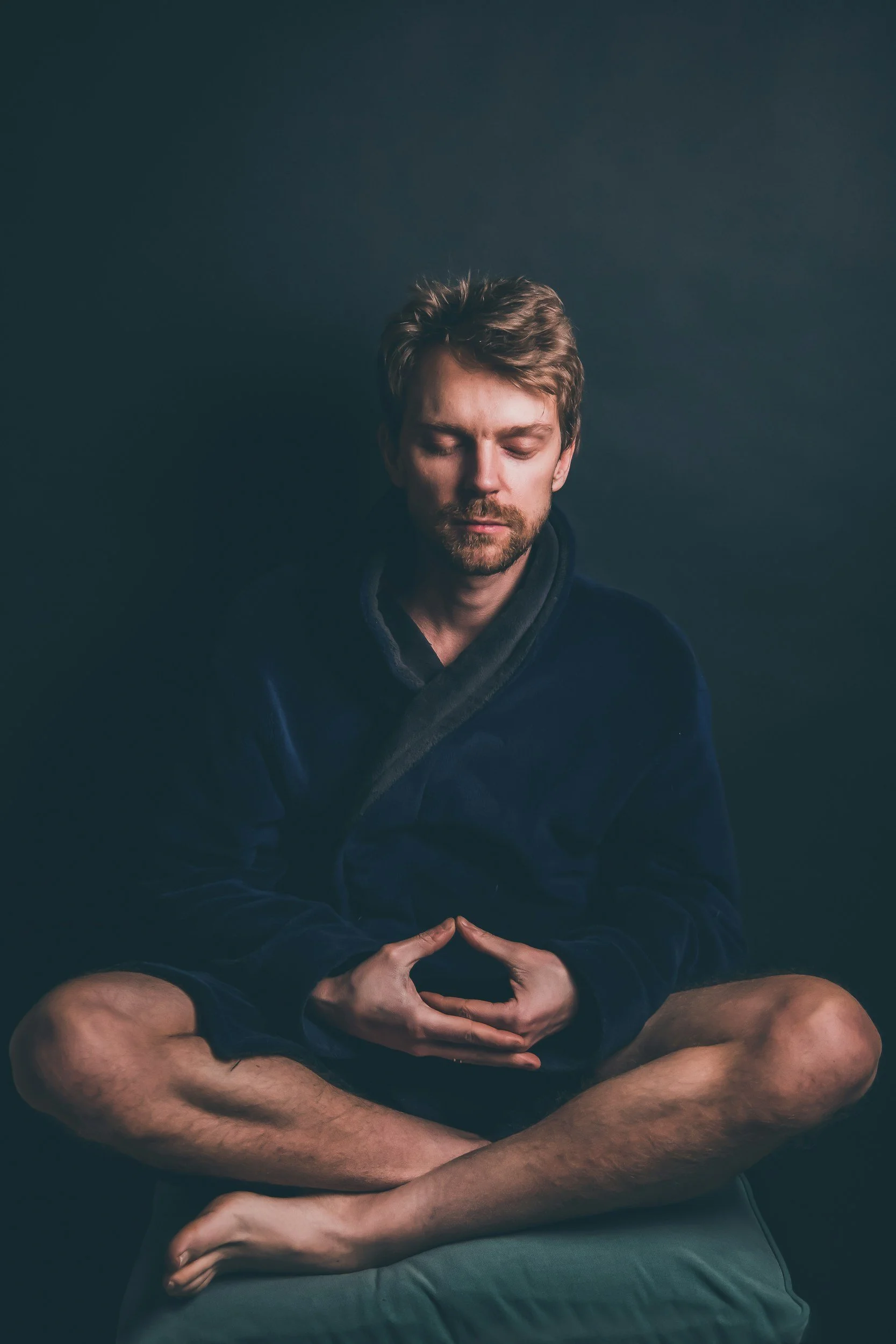
A BASIC DEEP RELAXATION TECHNIQUE: 3-8/10
3 deep breaths, eight regular breaths, over and over for 10 minutes
1. Close your eyes. Stop thinking, do not pay attention to thoughts, images, memories, feelings.
2. Focus attention on your body and begin to relax your muscles.
3. Single mindedly focus on your breath, in-breath, out-breath, over and over.
4. Take a deep, full, slow inhale through your nose, then a quick, sighing exhale through your mouth–3 times in a row.
5. Relax and feel the lightness and sense of well-being that washes through, but keep your focus on the experience of your breathing rhythm while the pleasant sensation slowly goes away.
6. Breathe normally for 8 breaths and then repeat the three deep breaths routine. Do this over and over for the remainder of the relaxation period.
7. Practice this technique for a minimum of 10 minutes every day. 20 minutes twice a day is best but is difficult to do.
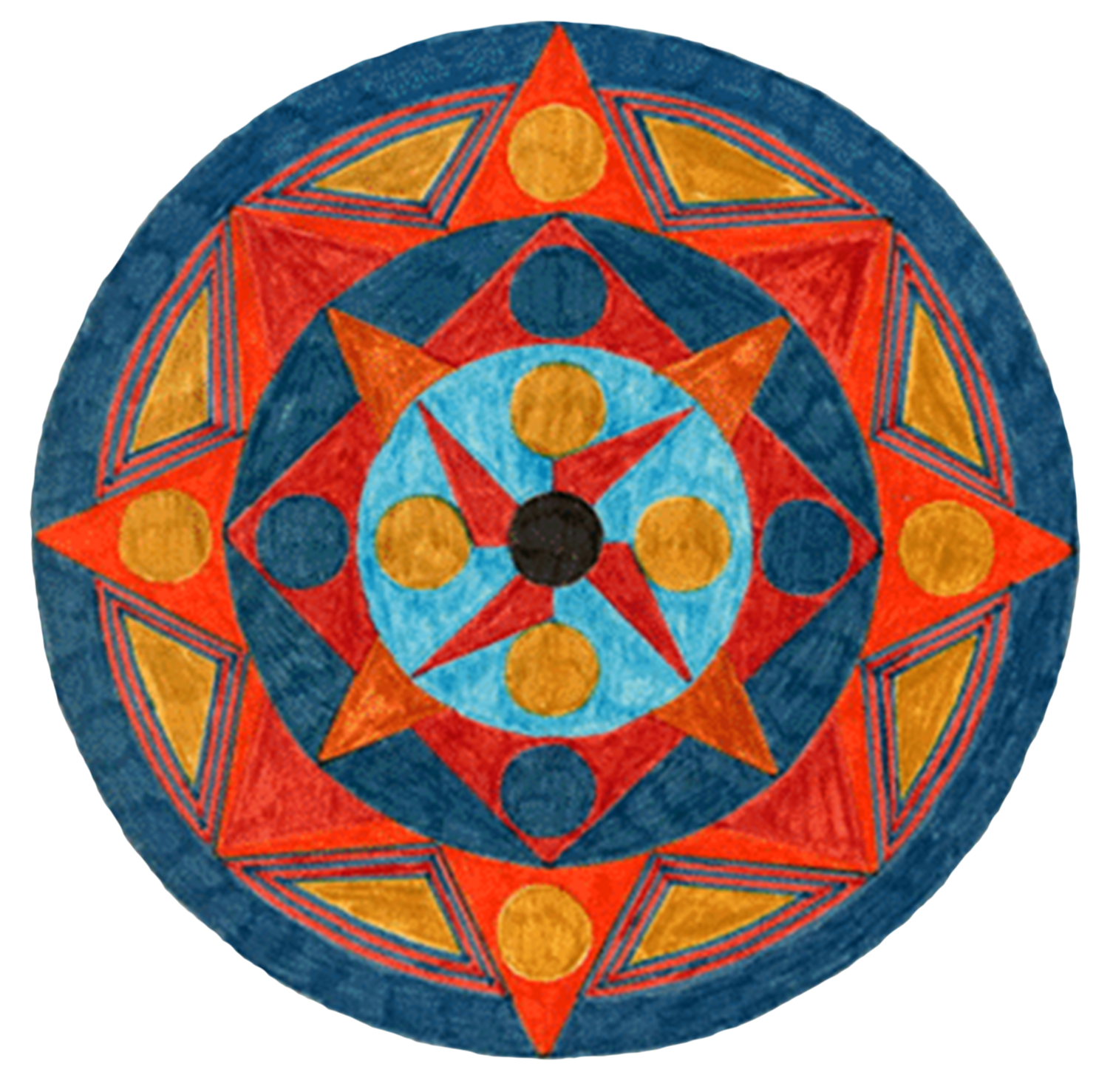
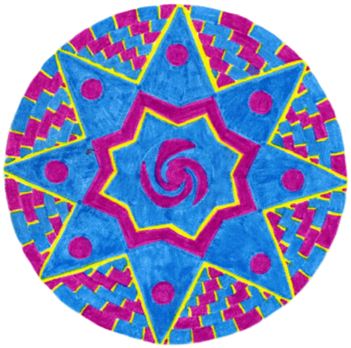
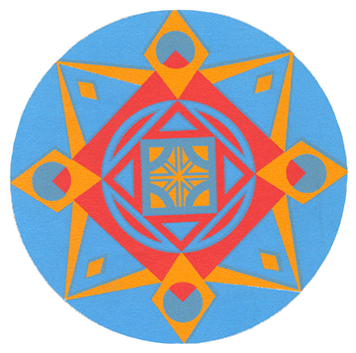
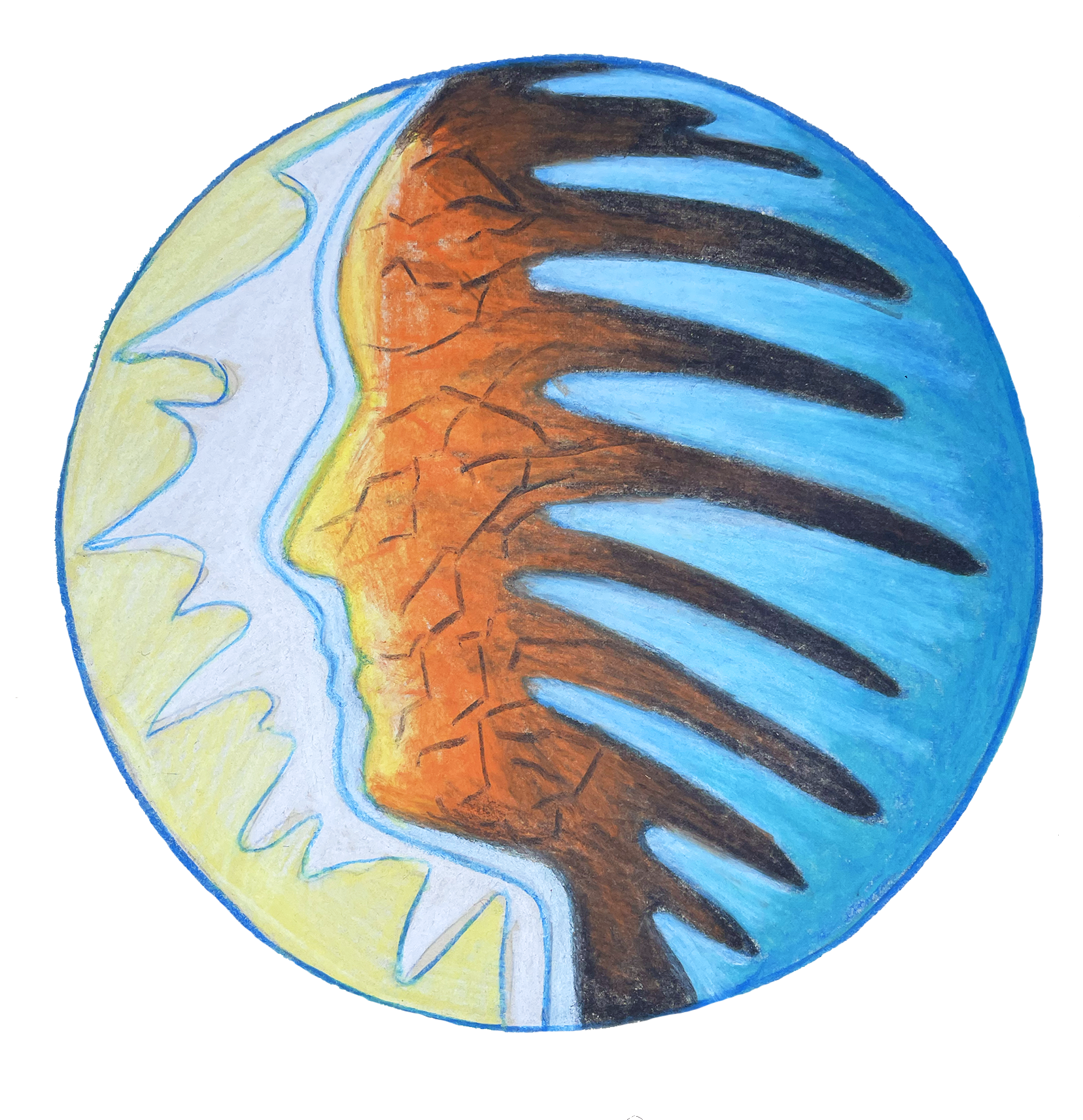
Mandalas by Michael Brown
Mandala Symbolism
Mandala means 'circle' in the Sanskrit language, and mandala art refers to symbols that are drawn, sketched or painted in a circular frame. Mandala art has been used throughout the world as a process of self-expression, in the service of personal growth and spiritual transformation. Tibetan Buddhism has employed mandala art for thousands of years to capture the images of the countless demons and gods which it believes both plague and uplift humanity. Navajo sand painters use them in their healing rites. Many native people use the Medicine Wheel, a mandala form, to connect to earth energies and the wisdom of nature.
The very fact that mandalas are drawn round can lead us to an experience of wholeness when we take the time to make them and then wonder what they mean. In the strict use of the mandala, there is a central point or focus within the symbol from which radiates a symmetrical design. This suggests there is a center within each one of us to which everything is related, by which everything is ordered, and which is itself a source of energy and power. Virtually every spiritual and religious system known to man asserts the reality of such an inner center. The Romans worshiped it as the genius within. The Greeks called it the inner daemon. Christian religions speak about the soul and the Christ within. In psychology we speak of the Higher Self.
SYMBOLIC DIMENSION
How do we begin to connect to this inner center? We need to learn how to work with imagination to see into the inner self. But when we begin to play with images and symbols, we move from a cognitive, rational, intellectual and narrow frame of reference and enter an expanded state of awareness. One of the primary functions of imagination is to help us see how our inner energies are operating, all at once, in a way the rational mind cannot perceive. Within each of us are a multitude of drives and desires, hopes and fears, wounds and latent abilities that need to be acknowledged and consciously dealt with if we hope to continue to grow as human beings, learn from our experiences, and move toward the synthesis of our biological, personal and spiritual potentials.
We cannot see into the unconscious directly, however, and so we need some kind of mirror with which to see the dynamic forces that operate within us. Mandala art provides such a mirror. Where once we might have experienced ourselves as a fragmented collection of subpersonalities and warring elements in opposition to one another (father-vs-professional, for instance, body-vs-mind, emotions-vs-reason, sexuality-vs-spirituality, etc.), through mandala art we can see how these parts fit complementarily together in the wholeness we truly are within. This is a critical point of view, and when we begin to take all of ourselves into account, when we begin to honor and balance the dynamic forces within us, we can act in the world in ways that honor our essential wholeness, get our needs met, and allow us to share with others the very best within us.
PSYCHOSYNTHESIS
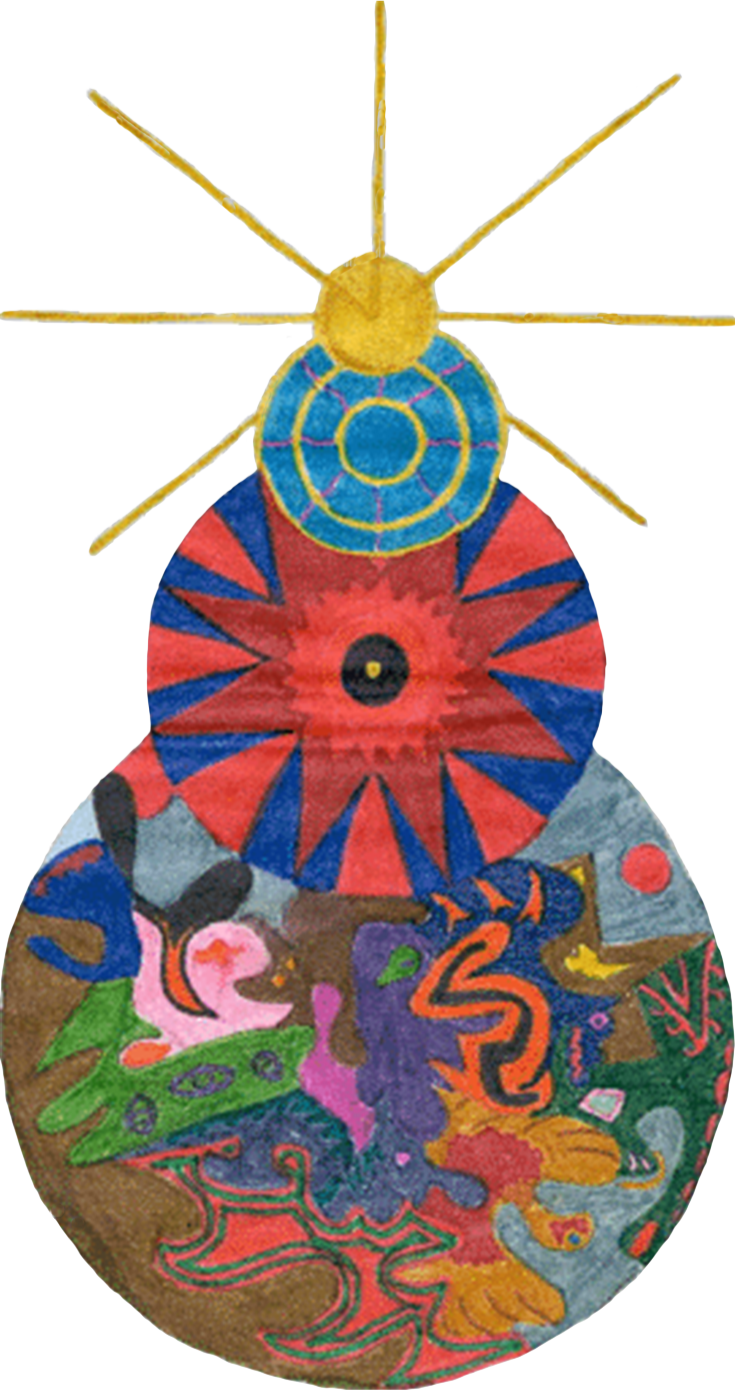
Psychosynthesis is a psychological and educational approach to human development first articulated by the Italian psychoanalyst Roberto Assagioli (1888-1974). Offering both a conceptual model for understanding how we can heal, develop, and transform consciousness and practical tools to achieve these goals, Psychosynthesis refers to a process directed toward the integration and harmonious expression of the totality of human nature--physical, emotional, mental and spiritual. One of the fundamental concepts in Psychosynthesis states that the human unconscious can be understood to involve three levels, and mandala art can help both explore and document discoveries made on these three levels.
A simple description suggests that the lower unconscious represents the past and in it is stored those experiences, memories, elements and dynamics that remain repressed or unresolved. The middle unconscious represents the present, and in it is stored all information, patterns, and dynamic energies functioning in the current stage in life. The higher unconscious represents the future and can be thought to contain all the unutilized talents and potentials waiting to be developed. The concept of the Higher Self expresses the presence of an inner guiding principle, the genius within, the divine spark to which the "I" aligns in cooperation with the unfolding and evolutionary process.
Practitioners of Psychosynthesis to assist individuals and groups in the soul-work of transformations of consciousness so that they can align with the guidance and inspiration of this Higher Self and thus find the energy and wisdom necessary to understand more deeply, work more creatively, love more authentically, and successfully meet the challenges which confront us at each stage in life.
HOW TO CREATE A MANDALA
There are many ways to create a mandala, but first we must lightly draw a circle on a sheet of paper or on a canvas. We can fill the circle in spontaneously, letting the drawing emerge step by step in a creatively unpredictable way, like doodling. Or, we can fill in the circle with special images that have come to us in deep relaxation, meditation, through the use of visualization techniques, etc. Within the circle we can capture important scenes from everyday life, or objects of fascination from the world of nature. Filling the circle in is the first step. Mandala art is a tool of integration for many reasons. The creation of these symbols involves many parts of us. Our body is involved in the mechanical act of drawing, and we experience our own nervous system in a new way in the fine movements required by the act of drawing. Our mental patterns are reflected in the specific forms and structures that emerge within the circle. Our feelings are reflected by our use of color.
When the mandala is complete, we have an interesting, often beautifully wholistic snapshot of what is going on within us and of our present reality. We can then look at the symbol with curiosity and wonder, figure out what the structures, colors, and interacting elements mean and thereby gain an expanded view of how our lives are working.
THE VALUE OF MANDALA ART
What is the value of mandala artwork? First of all, by drawing these symbols, we shift our attention from external preoccupations and concerns and connect to our own inner space. This inward attunement is often quite relaxing, refreshing, and energizing.
Second, mandala art is a private process of self-confrontation and self-expression for which we need not depend on a guide or therapist or outside consultant. In the search for the meaning of our experiences in life, we can sit down anytime we want to, draw a circle, fill it in, capture a reflection of what is going on inside and figure out what it means.
Third, through the mandala we can discover where our energies are blocked, where our resistance lies, in what roles and patterns we are stuck. Or, in compelling and graphic ways, we can celebrate our successes, portray the things which have inspired or touched us in life and, in this way, learn the most from them.
Fourth, mandala art can help us connect to, accept, love and learn from the very center of ourselves, the Higher Self so to speak, which struggles to live ever more freely and creatively in the world. One of the greatest challenges in life is to discover and nourish the deep springs of inner wisdom that flow within us, and spending time with mandala art encourages our inner genius to awaken, communicate, and express itself directly.
Fifth, mandalas can help us see the larger cycles that operate in our lives if we do them regularly, then review a series of drawings that have developed over time. Last, mandalas are powerful images to share with others. Through them we can share our inner realities with family and friends in honest and open ways, whenever we choose, and by this encourage our loved ones to share with us their depths as well.
We need to find ways to connect to our inner depths, to heal our wounds, and nurture the growth of new potential within us. Mandala art is one of the most creative, direct, and transformative ways to accomplish these important goals.
REFERENCES
Arguelles, J. & Arguelles, M. (1995). Mandala. Boston: Shambhala Publications.
Brauen, M. (1997). The mandala: Sacred circle in Tibetan Buddhism. Boston: Shambhala Publications.
Cornell, J. (1994). Mandala. Wheaton, IL: The Theosophical Publishing House
Fincher, S. F. (2000). Coloring mandalas: For insight, healing and self-expression. Boston: Shambhala Publications.
Jung, C. (1972). Mandala symbolism. R. F. C. Hull, trans. Princeton, NJ: University Press.
Tucci, G. (1970). The theory and practice of the mandala, Alan Houghton Brodrick, trans. New York: Samuel Weiser, Inc.